


500+
Successful Projects

 Loading…
Elexoft provides HIPAA compliant denial management services for US medical providers that need a structured way to review claim denials, identify root causes, support corrections or appeals, follow payer responses and track recurring issues.
Effective denial management in healthcare starts with understanding why the payer didn't process a claim as expected and what should happen next.
Elexoft's medical denial management services help practices organize denied claims into a clear workflow from denial review and root cause analysis to appropriate corrections, appeals, payer follow up and outcome tracking.
Rather than treating every denial the same way, we aim to identify the issue and move the claim toward the resolution path that fits its circumstances.




Elexoft provides structured denial management support to identify denial reasons, review claim issues, coordinate corrections and guide claims toward the appropriate resolution or resubmission workflow.
The first step is understanding what was denied and why. We review available payer and claim information to identify the affected claim or service line and organize the denial by reason, status, and required action. This helps distinguish issues involving eligibility, authorization, coding, documentation, medical necessity, timely filing, duplicate claims or payer specific requirements.
A denial reason explains part of the problem. Effective denial management also asks where that problem began. We review relevant claim history and payer information to identify the likely root cause and determine whether the next action belongs within denial management or another billing workflow.
Some denied claims can move forward after an appropriate correction. When payer requirements allow a corrected claim, staff can review relevant billing information, correct it within the appropriate scope and prepare it for resubmission. This differs from a front end claim rejection. Denial management focuses on claims the payer has already processed and now require action based on the payer's determination.
Not every denial should be corrected and resubmitted. Some require reconsideration or an appeal based on payer requirements, claim history, supporting documentation or other applicable information. Elexoft can support the administrative appeal workflow by reviewing the denial, organizing relevant billing information, identifying documentation needs, supporting appeal or reconsideration preparation and tracking the response.
Submitting a corrected claim, reconsideration or appeal does not complete the workflow. Payer follow up helps determine whether the payer received the submission, whether it needs additional information and what should happen next. Structured denial follow up keeps unresolved claims visible, rather than letting them sit indefinitely in a general billing queue.
Consistently following up on individual denials can reveal broader billing problems. Organizing denial reasons by payer, category, service or other relevant dimensions can help detect recurring patterns. You can then route the results back to the part of the revenue cycle that needs corrective attention.
Denial workloads can become difficult to manage when internal billing teams are simultaneously handling new claims, payment posting, patient billing, payer communication and accounts receivable.
A growing backlog can make consistent categorization, deadline awareness, appeals and follow up harder to maintain.
Outsourcing denial management gives practices focused operational support without necessarily outsourcing the entire revenue cycle. Elexoft can support denial review, root cause analysis, appropriate corrections or appeals, payer follow up and recurring denial visibility within a defined medical billing scope.


We begin with the denied claim, affected service line, available payer response and relevant remittance information.
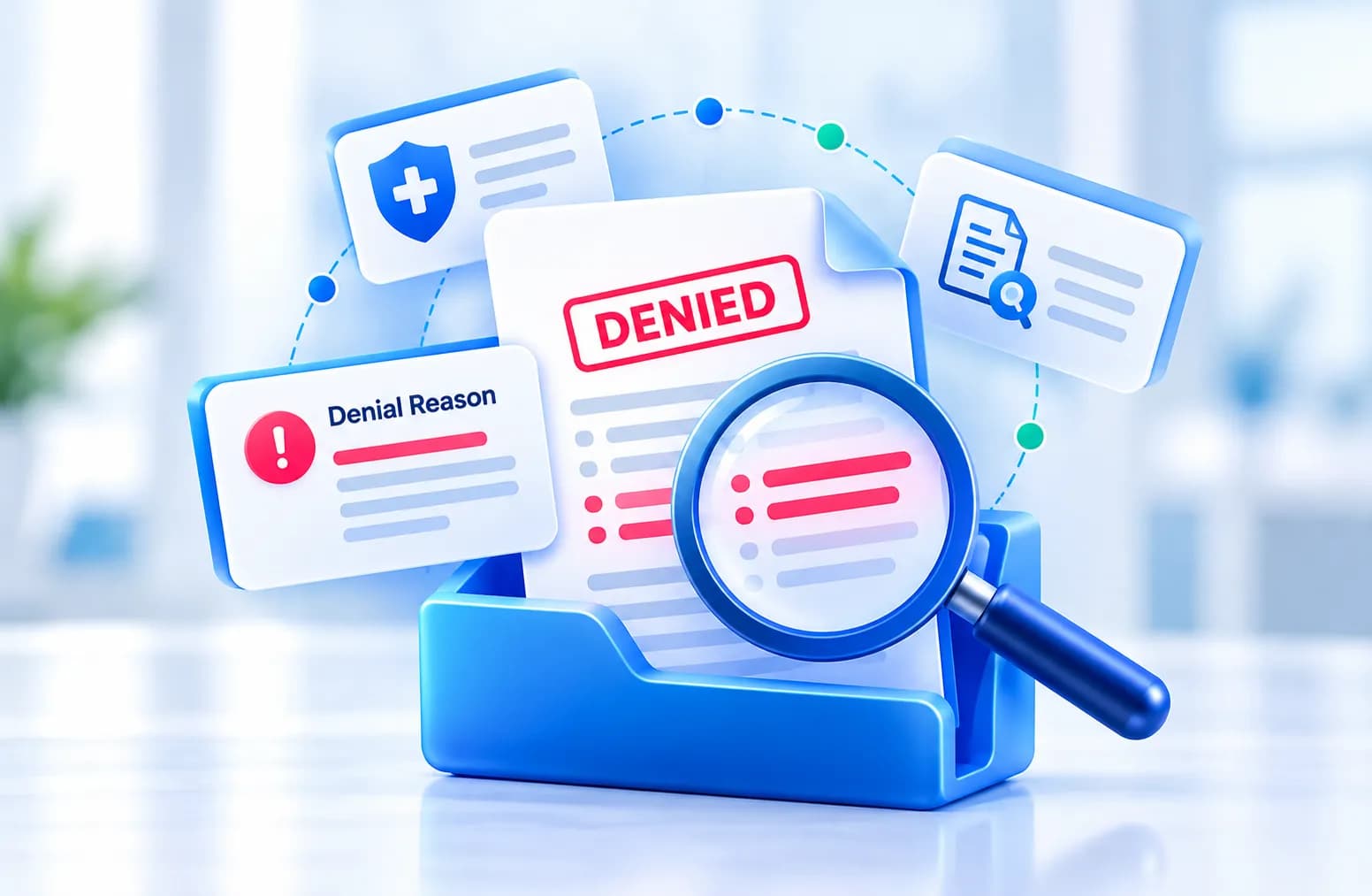
Review the payer's adjustment or denial information to understand the stated reason and determine what additional claim, billing or related documentation may be relevant.

Classify the issue by its likely source, such as eligibility, authorization, coding, documentation, medical necessity, timely filing, duplicate submission or another payer requirement.
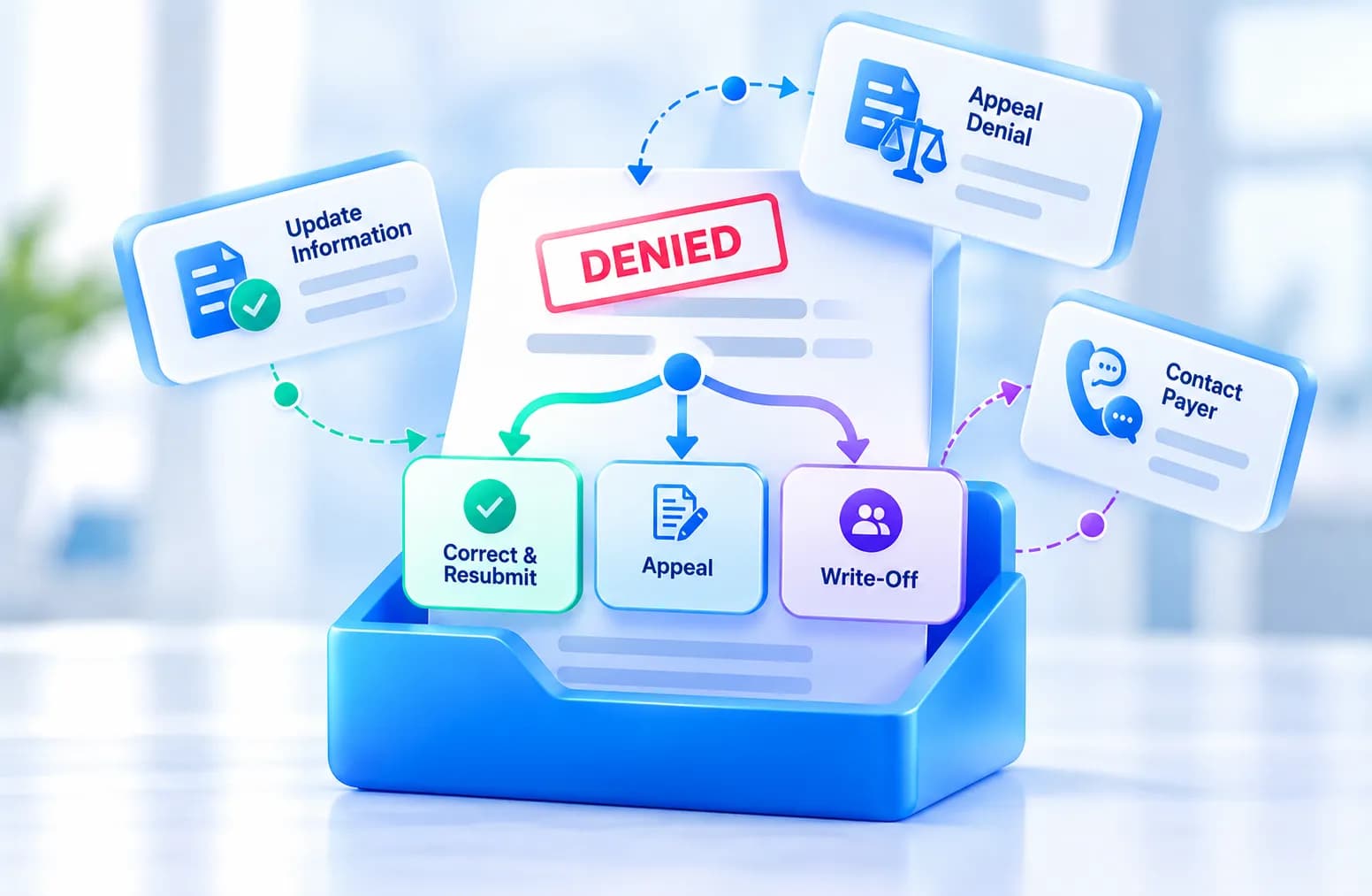
The next action depends on the denial. It may involve a correction, corrected claim, reconsideration, appeal, supporting documentation, payer follow up or input from another billing function.

Where follow up is within scope, the claim is tracked through the applicable payer workflow so responses, requests and following actions remain visible.

Communicate recurring denial causes back to insurance verification, prior authorization, medical coding, charge entry, claims processing or another relevant revenue cycle function.
Elexoft provides structured denial management support that connects denial review, root cause analysis, resolution, payer follow up and reporting with the broader medical billing workflow.
Categorize denials, identify root causes, and determine the appropriate next step for each claim.
Support corrections, appeals, resubmissions and payer follow up based on the specific denial reason.
Feed denial findings back into related billing activities and connect denial management with broader RCM services when needed.

Explore common medical claim denials involving eligibility, prior authorization, coding, documentation, timely filing, and duplicate claims, along with the workflows used to address them.




Denial management services help medical providers identify, analyze, respond to, track and learn from denied medical claims. Depending on the denial, the appropriate action may involve correction, resubmission, reconsideration, appeal support, payer follow up or cooperation with another billing function.

Talk with Elexoft about your current denial backlog, recurring denial patterns, appeal workload or broader revenue cycle requirements and determine the level of support that fits your practice.